Bob The Robber 5 Temple Adventure
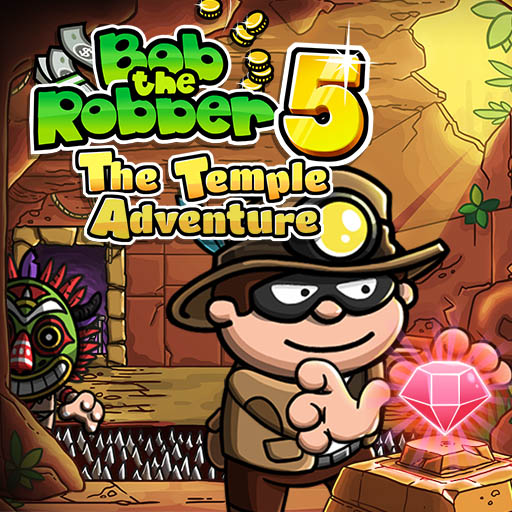






























Bob The Robber 5 Temple Adventure Wiki
Summary
Bob the Robber 5 Temple Adventure marks a significant evolution in the celebrated stealth-platforming series, transporting the titular burglar from the familiar urban landscapes of previous installments into the perilous depths of an ancient temple. Guided by a cryptic treasure map, Bob embarks on a high-stakes mission to recover legendary relics, rare gems, and the fabled diamond of the world. However, the temple is far from a lifeless ruin—it teems with supernatural guardians, including mummies, mercenaries, witch doctors, and sentient statues, all set to thwart any intruder. The environment itself is a labyrinth of deadly traps, locked chambers, and intricate puzzles. This game challenges players to combine stealth, strategy, and puzzle-solving acumen to navigate ten distinct levels, each introducing new threats and obstacles. For enthusiasts of the stealth genre, Bob the Robber 5 Temple Adventure offers a refined blend of tension, exploration, and reward, demanding both patience and precision from those who dare to enter.
zontally, the Up Arrow allows him to climb stairs, interact with objects, collect treasure, or knock out unsuspecting enemies, and the Down Arrow enables descending stairs or performing context-specific actions. Movement is grid-based, encouraging deliberate, step-by-step progress.
Stealth is paramount. Before entering any new room, players must observe the patrol patterns of guards and supernatural creatures. Bob can hide in shadowy corners, creep behind enemies, and when the moment is right, knock them unconscious from behind. A mistimed step or reckless approach can trigger an alarm, summon reinforcements, or lead to capture, forcing a restart of the level. Success hinges on patience and careful observation.
Puzzles and mechanical traps are interwoven with the stealth elements. Locked doors, security devices, ancient mechanisms, and passcode-protected gates block Bob’s path. To progress, players must search each room for clues, switches, and tools. Some puzzles require a specific item (e.g., a key or gadget) to disable a trap, while others demand decoding hidden numbers or symbols. The environment is interactive—levers, pressure plates, and movable objects all play a role in opening new routes.
Treasure hunting adds another layer of depth. Gold coins, gems, and other valuables are concealed throughout every level, often in secret alcoves, behind breakable walls, or beneath objects. A subtle visual or audio cue alerts the player when treasure is nearby. Finding all hidden collectibles is not required to finish the level, but it is essential for players seeking a perfect score and a fuller appreciation of the level design. Each successful heist rewards the player with a sense of mastery over both the environment and its hostile inhabitants.
Key Features
-
Ten Thematic Levels: The game presents a progressive sequence of ten levels, each with a distinct layout, new enemy types, and escalating difficulty. From the temple’s entrance to its innermost sanctum, every stage introduces novel puzzles and traps, ensuring that the gameplay remains fresh and challenging throughout.
-
Diverse Enemy Roster: Players must contend with a variety of adversaries, including mummies that patrol methodically, mercenaries with sharp reflexes, witch doctors who may possess supernatural abilities, and mystical statues that turn to stone any intruder caught in their line of sight. Each enemy type requires a different approach to avoid detection or neutralize.
-
Complex Puzzle Mechanics: The temple is filled with more than simple locked doors. Players will encounter pressure plates that trigger spike traps, stone doors that require a specific sequence of lever pulls, and cryptic symbols that must be matched to passcodes. Many puzzles are multi-step, requiring items found in earlier rooms or notes that reveal hidden combinations.
-
Stealth-Oriented Gameplay: The core design emphasizes remaining unseen. The game rewards careful planning, use of shadows, and timing of movement. Knocking out enemies is a tactical choice rather than a brute-force solution, as unconscious guards may be discovered by patrolling allies.
-
Hidden Treasures and Replayability: Each level contains multiple concealed coins and relics. The satisfaction of discovering every hidden item encourages thorough exploration and repeated playthroughs. The game tracks collected treasures, giving completionists a clear goal beyond simply finishing the level.
-
Responsive Controls: The arrow-key control scheme is simple yet precise, allowing players to execute quick, deliberate movements. Interactions are context-sensitive, reducing the need for complex button combinations and keeping the focus on strategy.
-
Engaging Atmosphere: The temple setting is brought to life through detailed pixel-art graphics, ambient sound effects, and a consistent ancient-Egyptian aesthetic. The visual design clearly communicates hazards, interactive objects, and safe zones, aiding player navigation without sacrificing immersion.
Precautions/Tips
-
Study Before Acting: Never rush into a new room. Take time to observe enemy patrol routes, trap trigger zones, and the positions of interactive objects. A few seconds of observation can save many attempts.
-
Utilize Shadows and Corners: Darkness is Bob’s greatest ally. Stay in shadowed areas to avoid detection, especially when enemies are nearby. Moving through lit corridors without cover is a surefire way to trigger an alarm.
-
Approach Enemies from Behind: To knock out a guard, you must be directly behind them and press the interaction key. If the enemy turns around mid-approach, retreat immediately. Patience is key—wait for a clear opening.
-
Beware Mystical Statues: Some statues in the temple have magical vision. If their eyes glow or they rotate to face you, hide or move out of sight before they activate. A direct line of sight can cause instant failure.
-
Search Every Nook for Coins: The game provides subtle cues—Bob’s expression or a small sparkle—when treasure is near. Check behind pillars, under movable objects, and along walls that look slightly different. Coins are often placed in areas that require solving a minor puzzle or backtracking.
-
Remember Passcodes and Patterns: If you encounter a code or sequence, write it down or commit it to memory. Some puzzles require you to replicate a pattern seen in a different room, and there is no in-game notepad.
-
Plan Your Escape Route: Before triggering a major puzzle or entering a guarded area, identify the nearest safe hiding spot. If an alarm is raised, you may need to retreat quickly to avoid capture.
-
Use Items Wisely: Items such as keys, tools, or gadgets are often single-use or have limited applications. Do not use them prematurely. Read the room carefully to determine where each item is needed.
-
Restart Strategically: If you are caught, the level resets. Use each failure as a learning opportunity. Note which enemy patrols or trap triggers caused the mistake, and adjust your approach on the next attempt.
-
Embrace the Challenge: The game is designed to reward trial and error. Do not become frustrated by repeated failures—each attempt hones your understanding of the level’s layout and mechanics. Mastery comes with practice.
Bob The Robber 5 Temple Adventure Frequently Asked Questions
Q: What is Bob The Robber 5 Temple Adventure?
A: Bob The Robber 5 Temple Adventure is a game where the famous burglar enters an ancient temple, outsmarts guards, solves puzzles, and steals treasures without getting caught.
Q: Where does Bob’s adventure take place?
A: The adventure takes place in a mysterious ancient temple filled with ancient riches, after Bob discovers a treasure map.
Q: What is Bob’s goal in the game?
A: Bob’s goal is to find valuable relics, rare gems, and the world’s most precious diamond while moving carefully, remaining unnoticed, and using his skills to overcome every obstacle.
Q: What kinds of enemies and obstacles are in the temple?
A: The temple contains mummies, mercenaries, witch doctors, mystical statues, and deadly traps that guard its hidden chambers.
Q: How many levels does the game have?
A: The game features ten levels, each introducing new rooms, enemies, traps, and puzzles.
Q: What is the objective in each level?
A: The objective is to guide Bob through the temple, collect treasure, and reach the exit without being captured.
Q: How can Bob stay hidden from enemies?
A: Bob can hide in dark corners, sneak behind enemies, and knock them unconscious when they are not looking. Observing the movement patterns of guards and creatures before entering a new area is key.
Q: How does Bob solve puzzles and disable traps?
A: Bob must search each room for clues, switches, and useful tools. Some traps require a specific gadget, while certain doors can only be opened with a hidden code.
Q: How can players discover hidden treasure?
A: Gold coins are concealed throughout each level. Bob will indicate when treasure is nearby, so players should examine walls, objects, and secret spaces carefully.
Q: What are the keyboard controls for the game?
A: Left Arrow moves left, Right Arrow moves right, Up Arrow climbs stairs, interacts with objects, collects treasure, or knocks out enemies, and Down Arrow moves downstairs or performs specific actions.
Q: What tips are given for a successful heist?
A: Tips include studying each room before moving forward, using shadows to remain hidden, approaching enemies from behind, avoiding the watchful eyes of mystical statues, and searching carefully for coins, passcodes, and hidden mechanisms.
Q: What other platform games are mentioned in the content?
A: Other platform games mentioned include Dino Island, Math Duck, Dino Shift 2, Shadowman Runner, Parking Adventure, Bowling Master, and many more.
Q: How can a user report a bug in the game?
A: Users can click the "Report a bug" button, then select the issue they found (e.g., game doesn’t load, game not working, lost progress, etc.) and send.
Q: How can users share the game with friends?
A: Users can click the "SHARE WITH YOUR FRIENDS" button to copy the game link and share it.
Q: What is the procedure to leave a comment on the game?
A: Users can type a comment in the comment box, agree to the terms and conditions, and click "Close" to post. The comment section shows newest, oldest, or popular comments.
Q: What is the genre and skill level of Bob The Robber 5 Temple Adventure?
A: The game is a Platform Adventure game for 1 player, with a skill requirement.
Bob The Robber 5 Temple Adventure Reviews
How To Play Bob The Robber 5 Temple Adventure
The core gameplay loop revolves around guiding Bob through each level while remaining undetected, collecting treasure, and reaching the exit. Players control Bob using a straightforward set of keyboard commands: the Left and Right Arrow keys move him hori